
Introduction
VAT compliance might seem straightforward on the surface, but small, easily overlooked mistakes can attract unwanted attention from the Federal Tax Authority and lead to penalties or audits. Getting proper VAT compliance services in place helps businesses avoid these pitfalls before they become costly problems. This blog covers the most common mistakes that tend to draw FTA scrutiny.
Why VAT Mistakes Carry Real Consequences
The FTA takes VAT compliance seriously, and even unintentional errors can result in penalties, interest charges, or a more detailed audit of your business’s financial records. Understanding the common mistakes that trigger scrutiny is the first step toward avoiding them entirely, rather than discovering them the hard way after a notice arrives.
What VAT Compliance Mistakes Are Most Likely to Trigger FTA Scrutiny in Dubai
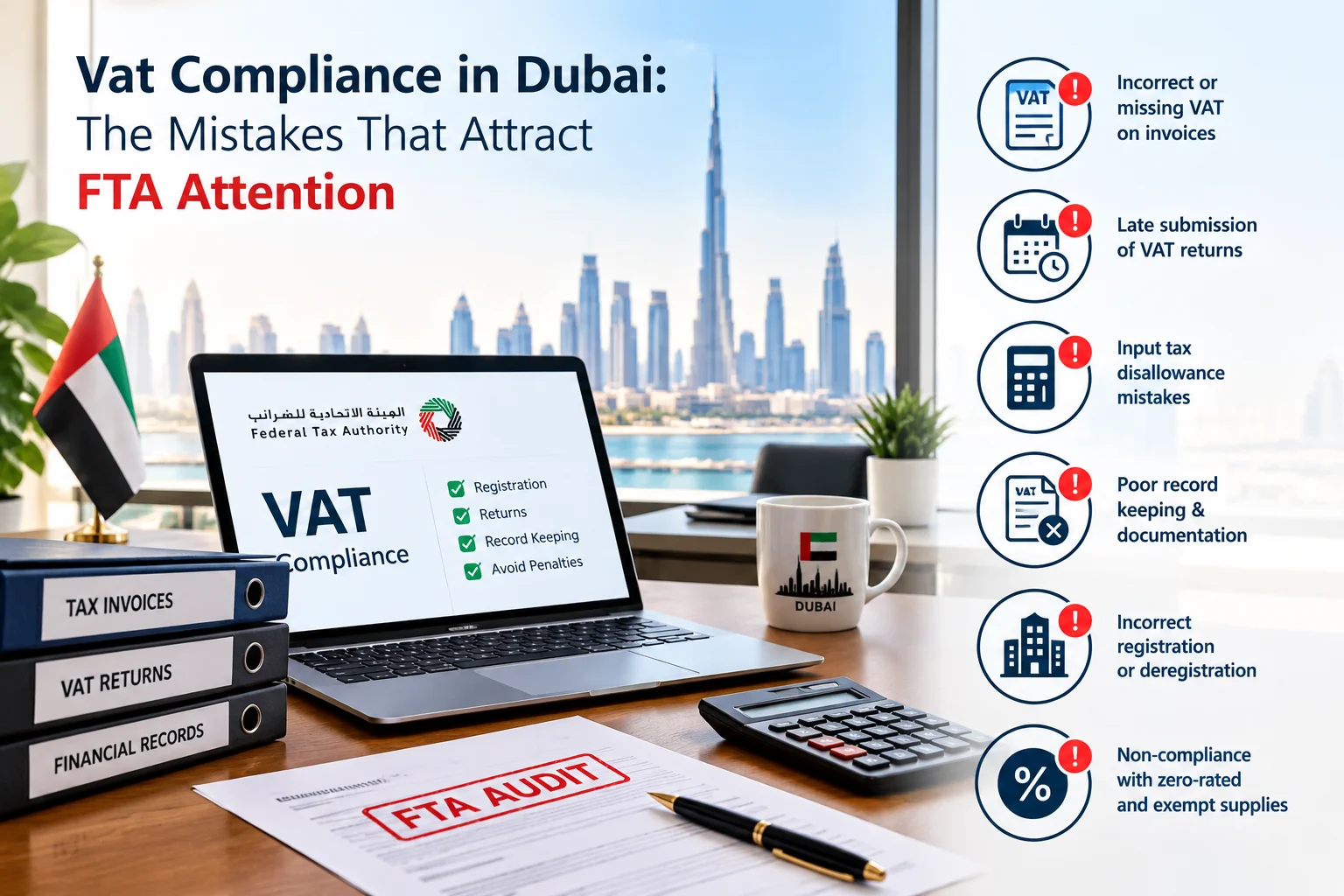
Common mistakes include inconsistent or late VAT return filings, mismatches between reported figures and actual financial records, incorrect application of VAT rates on specific goods or services, failing to issue proper tax invoices, and claiming input VAT on ineligible expenses. Patterns of inconsistency across multiple filing periods tend to draw particular attention.
Filing Errors That Raise Red Flags
- Late or inconsistent VAT return submissions
- Discrepancies between VAT returns and underlying financial records
- Incorrect VAT rate applied to specific transactions
- Missing or improperly formatted tax invoices
- Claiming input VAT on expenses that do not qualify
Record-Keeping Gaps That Cause Problems
Beyond the filing itself, poor supporting documentation is a major source of scrutiny. If the FTA requests evidence supporting a VAT return and a business cannot produce clear invoices, receipts, or reconciliation records, this raises questions even when the underlying figures were actually correct. Maintaining organized documentation throughout the year prevents this from becoming an issue.
What VAT Mistakes Attract FTA Attention in Dubai
In short, inconsistency is the common thread. Whether that means numbers that do not match between systems, filing patterns that look irregular, or documentation that cannot support what was reported, these inconsistencies are exactly what trigger closer FTA review. Businesses that maintain accurate, consistent records rarely face this level of scrutiny.
Building a Reliable VAT Compliance Process
Establishing a consistent monthly process for tracking VAT on sales and purchases, reviewing figures before filing, and keeping supporting documentation organized significantly reduces the risk of the mistakes that attract attention. This proactive approach is far less stressful than trying to reconstruct records after receiving an FTA inquiry.
Understanding How the FTA Selects Businesses for Review
While the exact selection criteria are not fully public, patterns like sudden changes in reported revenue, inconsistent filing history, or industries known for higher VAT complexity tend to attract closer attention. Businesses do not need to feel this is unpredictable or unfair; maintaining accurate, consistent, well-documented records is the most reliable way to stay outside this kind of scrutiny regardless of industry.
The Role of Regular Internal Reviews
Conducting a periodic internal review of VAT records, ideally before each filing rather than only when preparing annual accounts, helps catch small errors before they compound into bigger, harder-to-explain discrepancies. This habit is particularly valuable for businesses experiencing growth or changes in their product and service offerings.
Training Staff Who Handle Invoicing and Purchasing
Many VAT errors originate not from the finance team but from staff issuing invoices or processing purchases without a clear understanding of correct VAT treatment. Training relevant staff on basic VAT principles relevant to their role reduces the number of errors that eventually need correcting during the reconciliation and filing process.
Responding Appropriately If the FTA Does Reach Out
If the FTA does raise a query or request additional information, responding promptly, honestly, and with organized supporting documentation generally leads to a much smoother resolution than delayed or incomplete responses. Businesses with strong record-keeping practices typically navigate these inquiries with far less stress and disruption.
Why Small Businesses Are Not Exempt from Scrutiny
Some smaller businesses assume they are unlikely to face FTA review given their size, but VAT obligations apply regardless of business scale, and inconsistencies can attract attention just as easily for a small business as a large one. Treating VAT compliance seriously from the very first filing, rather than growing into the habit later, avoids unnecessary risk at any size.
Making Compliance Part of Company Culture
When accurate VAT reporting becomes a shared value across the whole team, not just a task owned by finance, the business naturally avoids many of the errors that come from treating compliance as someone else’s problem.
Conclusion
Avoiding FTA scrutiny comes down to consistency, accuracy, and proper documentation throughout the year, not just at filing time. Reliable VAT compliance services help businesses build this discipline into their regular financial processes. DDP ACCOUNTING & BOOKKEEPING supports businesses in maintaining accurate, well-documented VAT compliance that stands up to scrutiny.